
Knee pain is a common concern, impacting individuals of all ages and activity levels. There are 3 most common causes of knee pain:
1.Knee osteoarthritis
2.Patellofemoral pain
3.Meniscal injury and tear
The cause of pain varies with age or status of injury. Pain because of knee issues can significantly limit daily activities and even persistent sadness/depression. Though osteoarthritis is a disease of wear and tear, but long periods of rest are actually detrimental for knee health and increase the disability in long term. The most effective way to manage knee pain irrespective of age is actually targeted exercises to strengthen muscles around the knee joint like Quadriceps, Hamstrings, Hip muscles (gluteal muscles)and Calf muscle (gastrocnemius) according to Dr Ekta gupta Pain Management specialist. Regular Isometric exercises (stretching ) followed by strengthening exercises reduces pressure on the joint, improves mobility and biomechanics of the joint.
This article presents a guide to exercises that can be incorporated into your routine for a stronger, more comfortable knee. Regular exercises can decrease the need of painkillers for maintaining mobility. We have divided exercises into 3 groups
1.Simple exercises Step 1 – done at beginning of diagnosis and pain for atleast 2 weeks
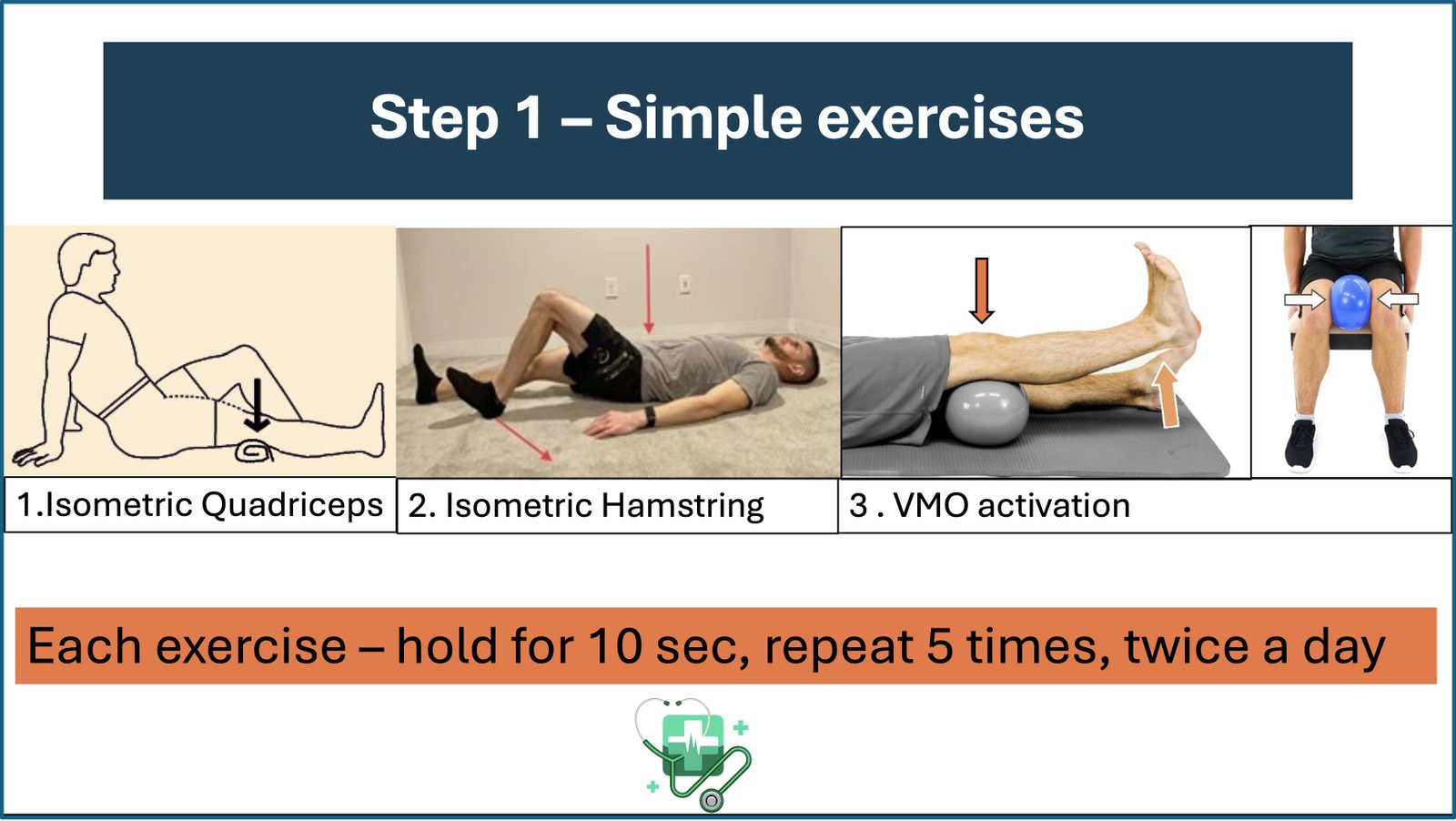
2.Strengthening exercises Step 2– to be added to simple exercises after 2 weeks
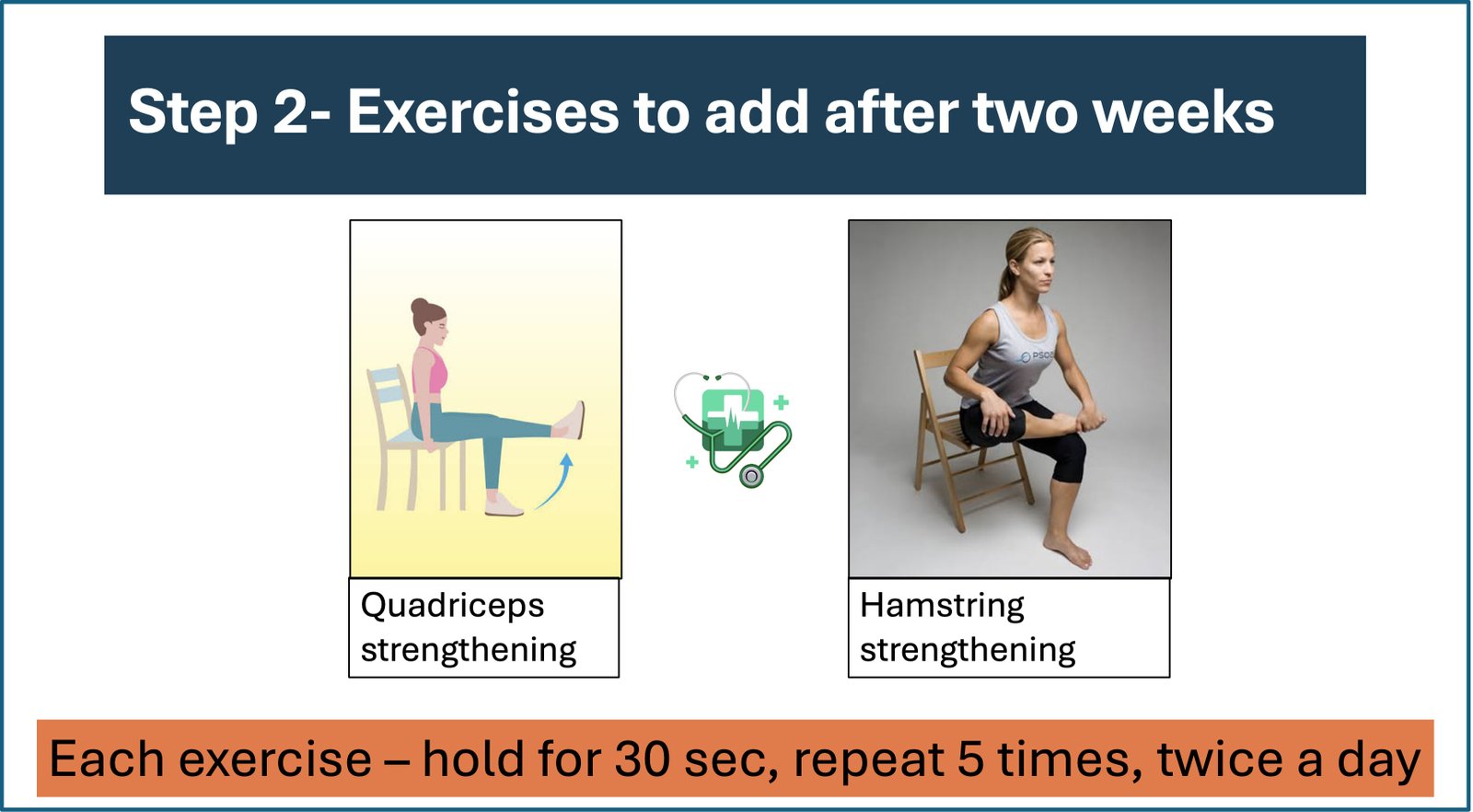
3.Advance exercises Step 3 – to be done under close supervision
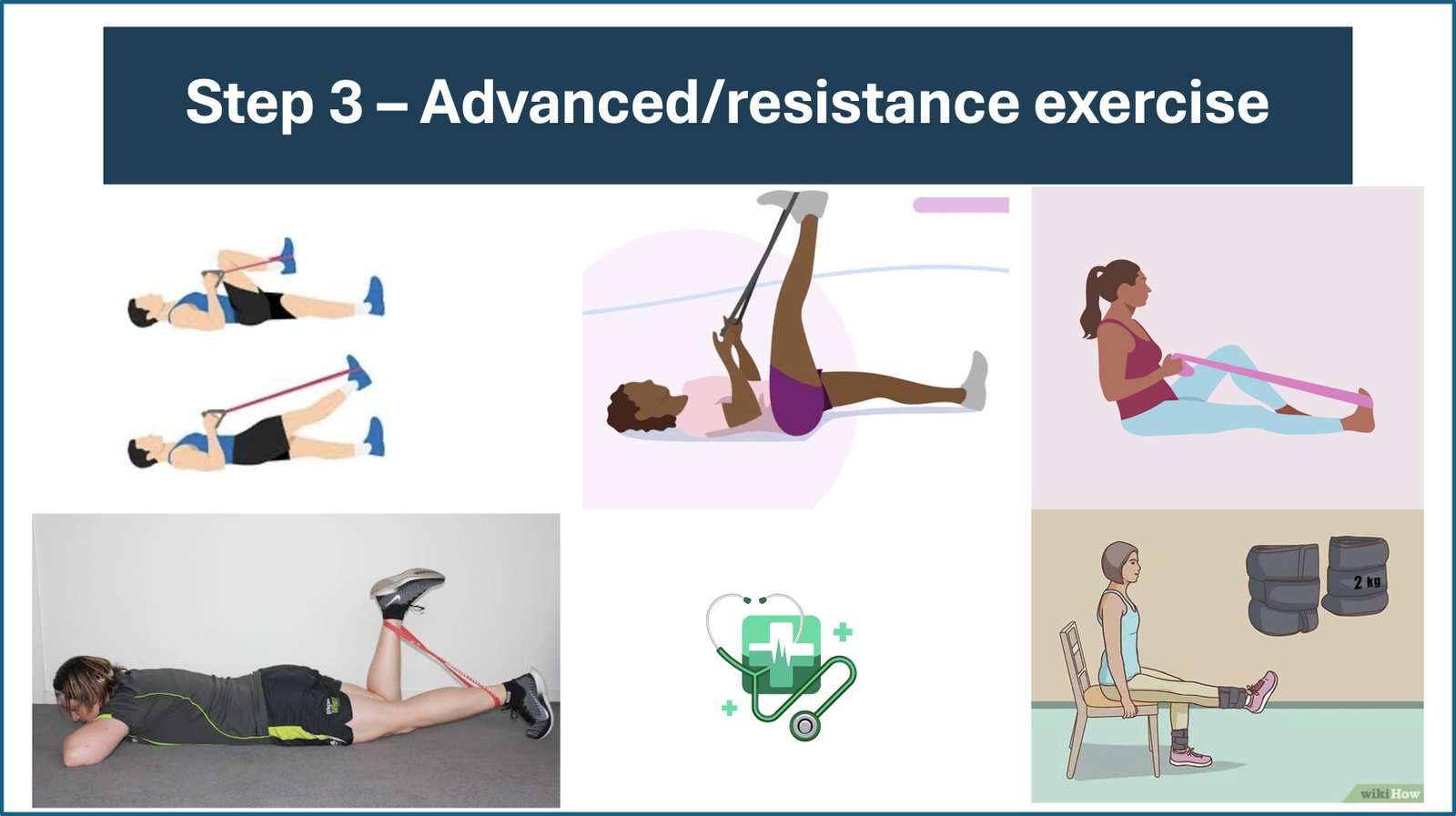
Before embarking on any exercise program for knee pain, it is crucial to consult with a healthcare professional, such as a pain doctor or orthopedic doctor. They can accurately diagnose the cause of your knee pain, determine if exercise is appropriate, and guide you toward a safe and effective exercise plan tailored to your specific needs and condition.
One can supplement low-impact activities/exercises including walking, cycling, swimming and water aerobics, using an elliptical trainer, and practicing yoga or Tai Chi. These help to increase the blood flow to muscles and prevents any soreness/tightness.
Precautions : It is important to listen to your body and stop any exercise that causes sharp pain. Avoid high-impact activities and don't overdo it. Increase intensity only gradually. Ensure adequate rest and recovery, always warm up and cool down, and wear supportive footwear.
Conclusion : With consistent effort, a mindful approach to pain management, and expert guidance, you can find relief from knee pain and enjoy a more active, healthier life. These exercises can often be supplemented with minimally invasive interventions in the form of regenerative therapy or radiofrequency treatment.